
How a Long-Lost Remnant of a 1920 Shipwreck Wound Up at the Sea Isle Museum
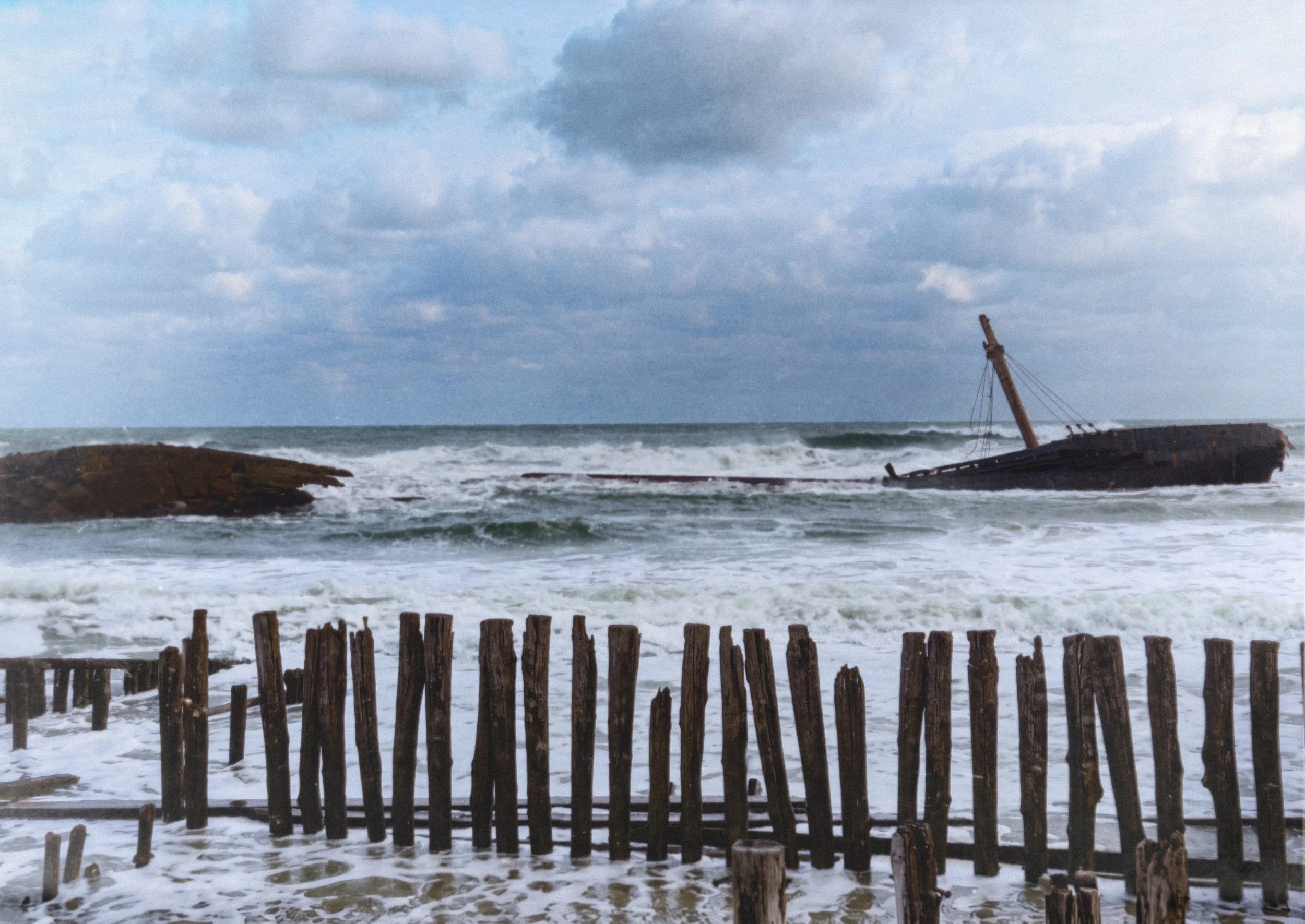
The Skolfield was wrecked on 25th Street in 1920. This photo was sold at a yard sale in Cape May in 1989 and restored by the Sea Isle Times this summer.
Ahoy, mateys! Are you ready for a real-life shipwreck adventure? This could be fun for adults and children alike.
We’ll begin our adventure way back in 1885 when the George R. Skolfield was launched in Brunswick, Maine, by George R. Skolfield. His namesake ship was a three-masted, 232-foot vessel that weighed roughly 3,500 pounds. It was a three-decked, sturdy vessel intended to carry cargo to all kinds of exotic destinations around the world – treasures from Hawaii, the Orient, and Europe were regularly packed in her cargo holds. Skolfield was a meticulous master shipbuilder. It was built at a cost of about $90,000. Adjusted for inflation today, that might be $3.5 million.
We’ll fast-forward in our tale about 35 years. Time had begun to take advantage of the Skolfield’s wooden timber. By then, the Skolfield’s three masts had been replaced, and she had been converted into a schooner barge – a vessel designed to be towed while carrying cargo. In January 1920, she set out on what would be her final voyage, traveling from Fall River, Mass., to Hampton Roads, Va., under tow. But Mother Nature had other plans.
A nasty Nor’easter kicked up, causing the Skolfield to run aground around 25th Street in Sea Isle City on Feb. 5, 1920. The four crew members on board the Skolfield were all rescued by the Ludlum Island crew of the United States Coast Guard. According to news reports, attempts were made to retrieve as much of the cargo as possible, but the salvage crews said that much was left to the sea. The sands of time would soon cover most of the remnants of the wreck.
Now fast forward once again, this time to June 1971. Susan Langston was walking along the beach in Sea Isle City when she came across some old wooden pieces of something. It would turn out to be what was remaining of the Skolfield. News reports from the day claim that Langston brought a truck to the site, at her expense, in an attempt to lift and salvage the ship. It appears that she was only able to salvage small parts of it.
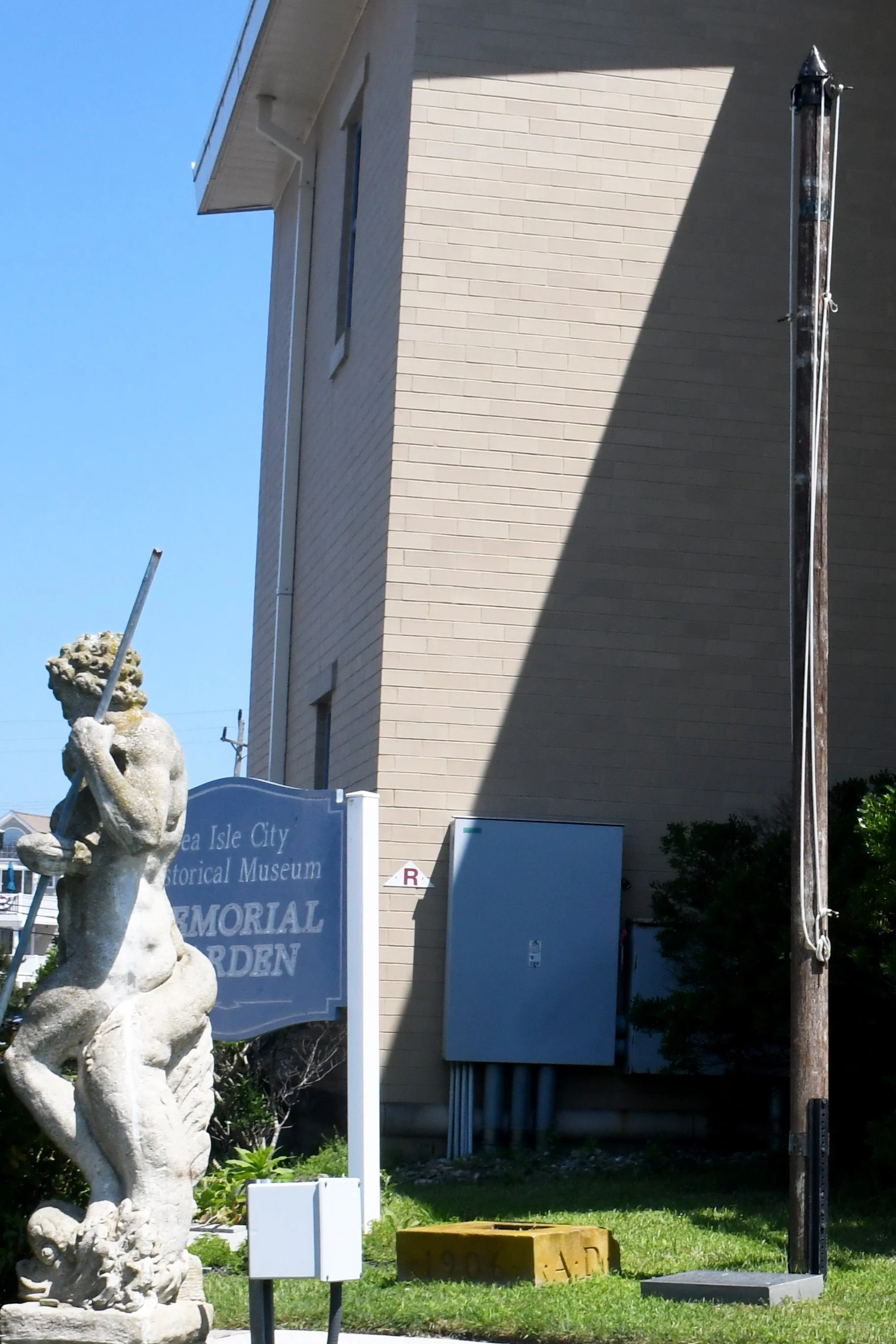
The mast of the Skolfield after serving as the ship’s mast and the City flagpole for many years, as it looks today behind the Sea Isle City Museum.
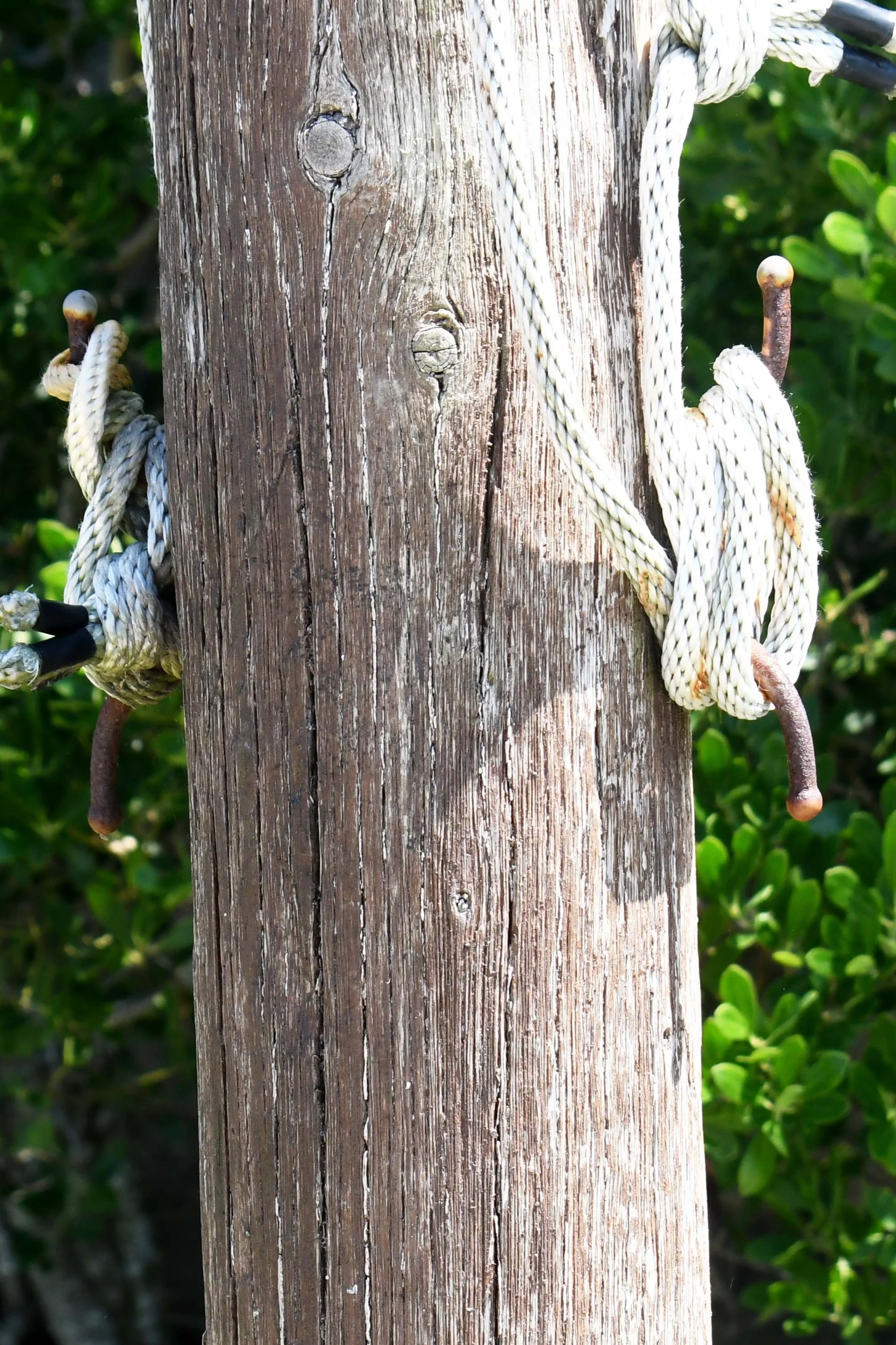
A close-up of the mast of the Skolfield. Given its years as a tree, this piece of lumber must be at least 175 years old. You can see this relic behind the Sea Isle City Historical Museum.
It’s widely assumed in town that some of the strong timbers from the Skolfield probably made it into reinforcements of cottages throughout Sea Isle City. One of the masts made it to City Hall (45th and Landis), where it was utilized as the town’s flagpole for several years.
It served that purpose until the town purchased a new aluminum pole. The plan was for the old wooden mast to be removed and taken to the city’s dump. But a funny thing happened on the way to the dump. City supervisor Joe LaRosa, father of a frequent writer to our pages, Joe LaRosa Jr., couldn’t bring himself to turn the pole into garbage. Instead, he took it home and used it as a laundry pole – back in the days before everyone used a gas dryer and instead hung their clothes outside on clotheslines. It remained there until about 2005 when the LaRosa family made sure that it was taken to the Sea Isle City Historical Museum, where it now sits behind the facility for all to see some 140-plus years after it was launched on the George R. Skolfield.
It might be fun to take a walk along the beach on 25th Street. Look carefully in the sand, you never know what Mother Nature might dredge up from beneath the sand and deposit on the beach. It happened in 1971. It could happen again. And you could be on a real-life treasure hunt.
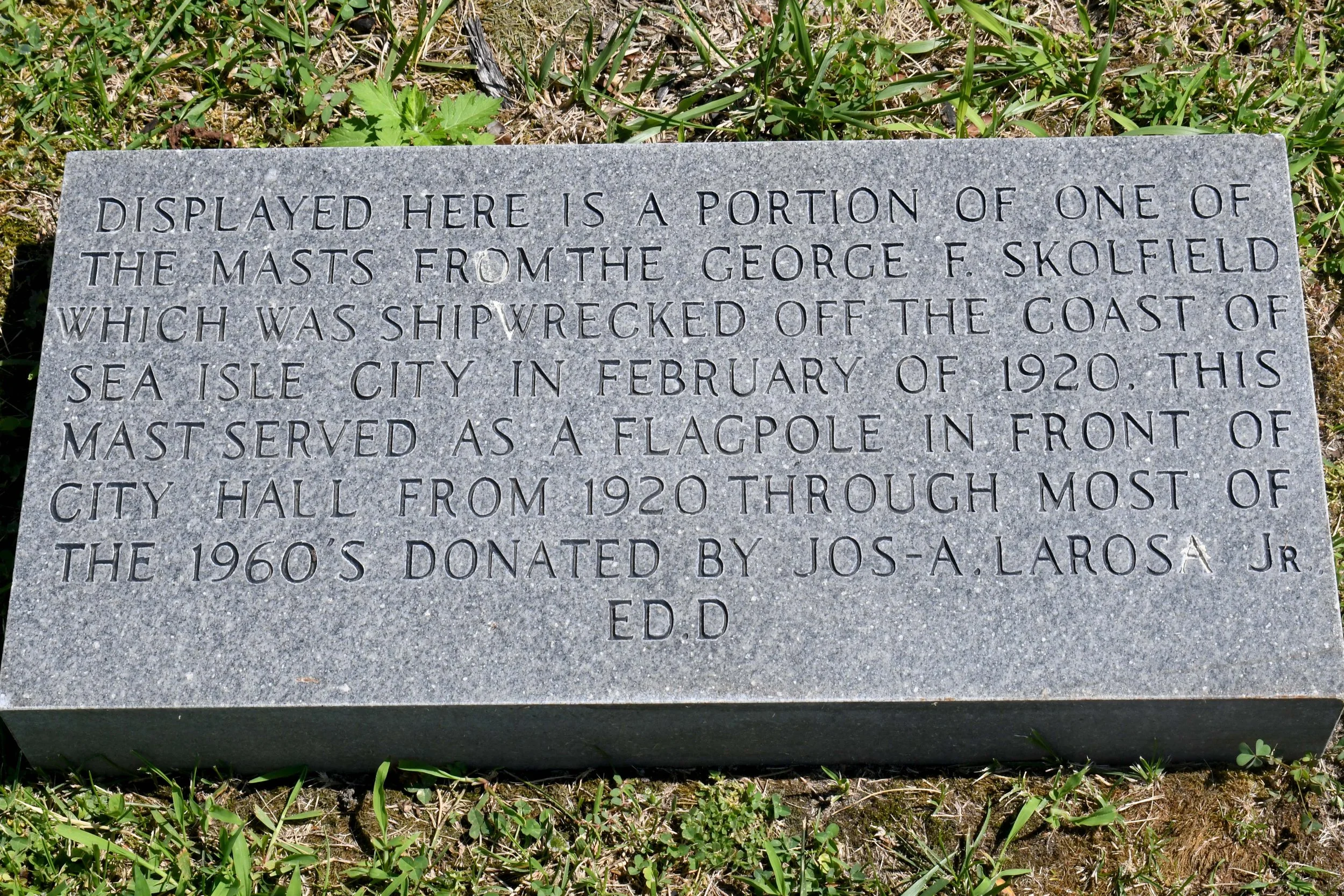
The plaque that commemorates the mast of the George F. Skolfield. Our own Joe LaRosa appears to be the Kevin Bacon of SIC. If it’s related to SIC, the LaRosa family must be involved.